
Healthcare Access in India Sees Seismic Shift as Insurance Coverage Triples, NSO Data Reveals
Public hospitals are reclaiming their role as the backbone of essential care. The survey highlights a "near-universal" success in maternal health, with institutional deliveries now reaching 96%, a historic milestone for India’s public health infrastructure.
- By Newsdesk
- New Delhi
- Apr 29, 2026
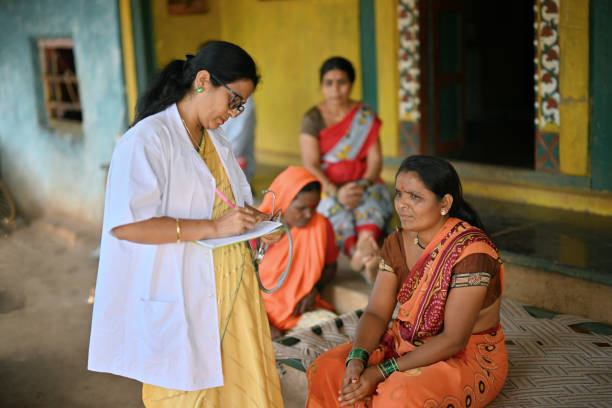
A defining shift is underway in India’s healthcare landscape. According to the latest 80th Round of the National Statistical Office (NSO) survey, the country has witnessed a transformative surge in medical access, underpinned by a massive expansion in health insurance and a renewed reliance on public facilities. The findings signal that targeted policy interventions are beginning to alter the healthcare-seeking behavior of nearly 1.4 billion people.
The Great Insurance Leap
The survey’s most notable revelation is the collapse of the "insurance gap" that has historically left millions vulnerable. Between 2018 and 2025, health insurance coverage in rural India skyrocketed from a negligible 14% to a staggering 47.4%. Urban India followed a similar trajectory, with coverage now hovering above 44%. Analysts point to the aggressive scaling of federal and state-sponsored health financing schemes as the primary engine behind this near-tripling of the safety net.
Public Health: The Return of the Primary Provider
Public hospitals are reclaiming their role as the backbone of essential care. The survey highlights a "near-universal" success in maternal health, with institutional deliveries now reaching 96%, a historic milestone for India’s public health infrastructure.
The data underscores a growing trust in government-run facilities:
- Zero-Cost Outpatient Care: Roughly 50% of outpatient treatments in public hospitals were provided entirely free of charge, with the median expenditure recorded at zero.
- Rural Utilization: In rural regions, the preference for public facilities for outpatient care rose significantly, climbing from 28% in 2014 to 35% in 2025.
The Persistence of 'Financial Toxicity'
However, the road ahead is fraught with economic hurdles. While access has improved, the "financial toxicity" of medical care remains a stark reality. Over the survey period, the cost of hospitalization rose by 97% in rural areas and 77% in urban centers.
The disparity between public and private costs remains cavernous:
- The Expenditure Gap: While the average stay in a public hospital costs approximately ₹6,631, a stay in a private facility can be up to 20 times more expensive, averaging over ₹72,000.
- Out-of-Pocket Stress: Despite expanded insurance, the burden on individual pockets remains heavy. In rural India, out-of-pocket expenses still account for nearly 95% of total hospitalization costs, forcing families to rely on personal savings and high-interest loans.
The Epidemiological Transition
The NSO data also charts a shift in the nation's health profile. As infectious diseases retreat, Non-Communicable Diseases (NCDs)—such as diabetes and cardiovascular conditions—are surging. Approximately 13.1% of the population reported suffering from an ailment during the survey window, a sharp increase from the 7.5% reported in 2018, with the highest morbidity rates seen among the elderly.
Policy Implications
The findings suggest that while India has successfully built the "pipes" for healthcare access, the next frontier is affordability and regional equity. With the upcoming Digital India Act and the DPDP Act expected to streamline health data governance, the focus is now shifting toward integrating these digital tools to further slash the economic burden on the average Indian household.