
India Issues Travel Advisory for Congo, Uganda and South Sudan Amid Escalating Ebola Emergency
Public health experts have warned that the outbreak could become harder to control due to limited healthcare infrastructure, regional instability and the absence of a licensed vaccine for the current virus strain. International agencies are now exploring experimental vaccines and antiviral treatments as efforts intensify to contain the spread.
- By Newsdesk
- New Delhi
- May 25, 2026
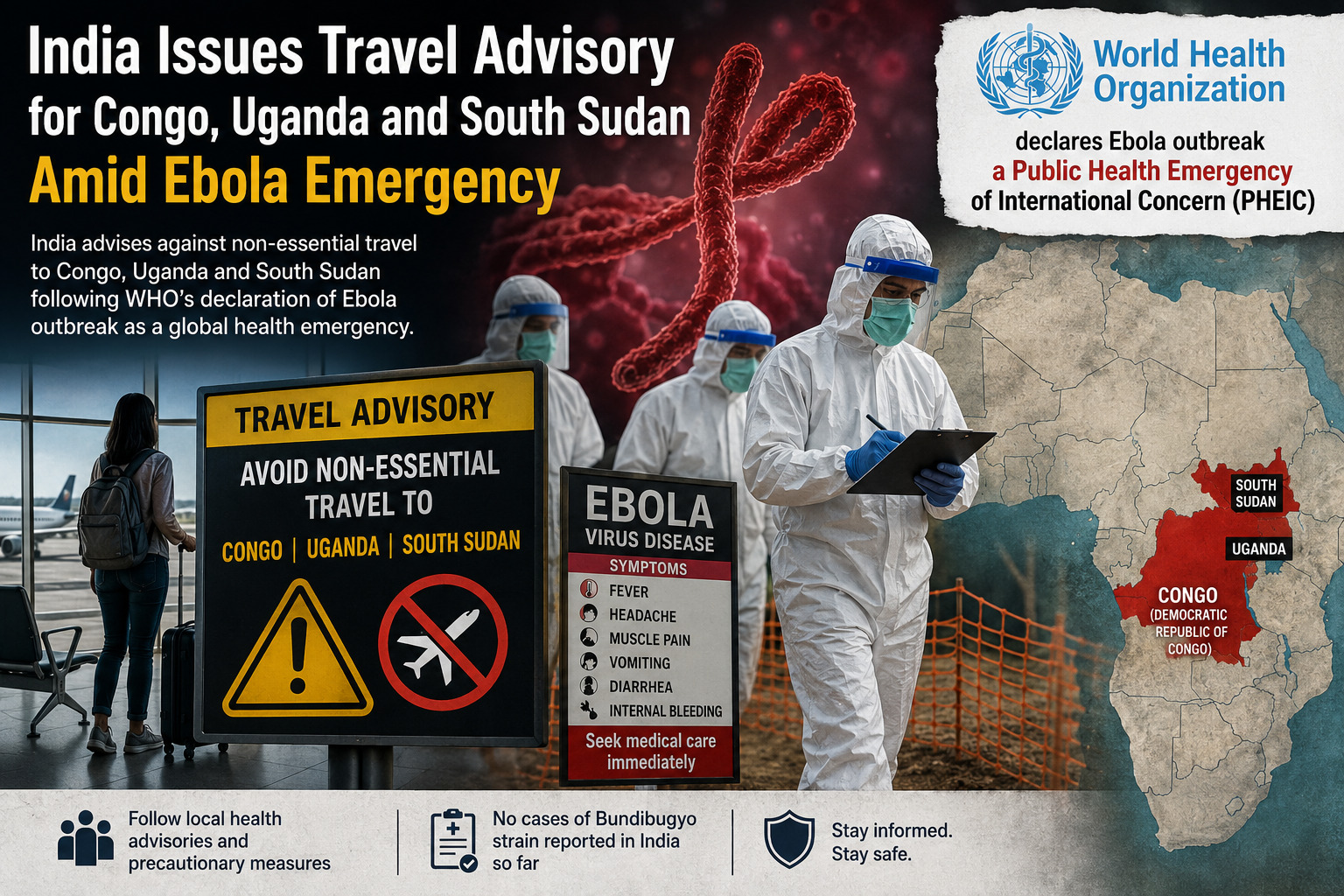
India has advised its citizens to avoid non-essential travel to the Democratic Republic of Congo, Uganda and South Sudan following growing global concern over a rapidly spreading Ebola outbreak in parts of Africa. The advisory comes after the World Health Organization (WHO) declared the situation a Public Health Emergency of International Concern (PHEIC), raising alarm over the scale and pace of infections linked to the Bundibugyo strain of the Ebola virus.
In its official advisory, the Indian government urged citizens currently residing in or travelling to the affected regions to strictly follow local public health guidelines and maintain heightened precautions. Authorities also clarified that India has not reported any case associated with the Bundibugyo strain so far.
The latest outbreak, centred largely in eastern Congo, has intensified concerns across neighbouring countries, particularly Uganda and South Sudan, due to cross-border movement and rising suspected infections. According to international health agencies, the current strain has no approved vaccine or targeted treatment, making containment efforts significantly more challenging.
Reports indicate that Congo has already recorded hundreds of suspected deaths and a sharp rise in possible Ebola cases, while Uganda has confirmed multiple infections connected to the outbreak. Health officials in the region have introduced emergency surveillance measures, travel monitoring and restrictions on public gatherings to limit transmission.
The WHO has also recommended stricter screening protocols at international entry points to identify travellers with unexplained fever or symptoms arriving from affected areas. India’s advisory aligns with these recommendations as authorities seek to minimise the risk of imported infections and strengthen preparedness measures.
Public health experts have warned that the outbreak could become harder to control due to limited healthcare infrastructure, regional instability and the absence of a licensed vaccine for the current virus strain. International agencies are now exploring experimental vaccines and antiviral treatments as efforts intensify to contain the spread.