
Lilly and Nvidia Join Forces to Build Pharma’s Most Powerful AI Supercomputer
The collaboration aims to transform how new therapies are designed, tested, and brought to patients—marking a new era in the fusion of biotechnology and artificial intelligence.
- By Newsdesk
- New Delhi
- Oct 29, 2025
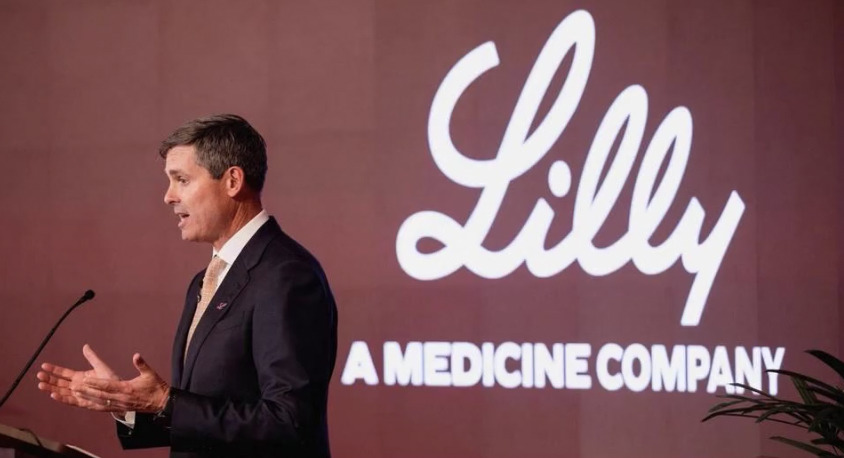
In a groundbreaking move set to redefine the future of medicine, Eli Lilly & Company has partnered with Nvidia Corporation to create one of the world’s most powerful AI supercomputers dedicated to drug discovery. The collaboration aims to transform how new therapies are designed, tested, and brought to patients—marking a new era in the fusion of biotechnology and artificial intelligence.
The system, powered by Nvidia’s DGX B300 architecture with nearly 1,000 GPUs, will serve as an “AI factory” capable of running millions of simulated drug experiments. This high-performance computing power will enable Lilly’s scientists to model complex biological systems at an unprecedented scale, significantly accelerating the pace of early-stage drug development.
Through its TuneLab federated learning platform, Lilly also plans to make AI capabilities accessible to select biotech partners while maintaining strict data security and intellectual property protection.
Beyond discovery, the supercomputer will also support advanced applications across manufacturing optimization, imaging analysis, and enterprise-level AI—helping reduce the time, cost, and environmental impact traditionally associated with drug development.
According to company leaders, the collaboration reflects a paradigm shift from using AI merely as a research tool to viewing it as a true scientific collaborator. The system is designed to operate on 100% renewable energy, with liquid-cooling technologies minimizing its environmental footprint.
By integrating AI-driven simulation, predictive modeling, and sustainable computing, the Lilly–Nvidia partnership underscores how technology and life sciences are converging to accelerate the next generation of medical breakthroughs. This initiative could dramatically shorten the timeline for discovering and delivering new treatments—reshaping the global pharmaceutical landscape for years to come.
(Source: Reuters)