
The GLP-1 "Bubble": Weight-Loss Blockbusters Masking a Deepening Pharma Innovation Crisis
A report published on May 4, 2026, by Deloitte highlights that obesity treatments have overtaken oncology as the primary driver of late-stage pipeline value for the first time in 16 years.
- By Newsdesk
- New Delhi
- May 05, 2026
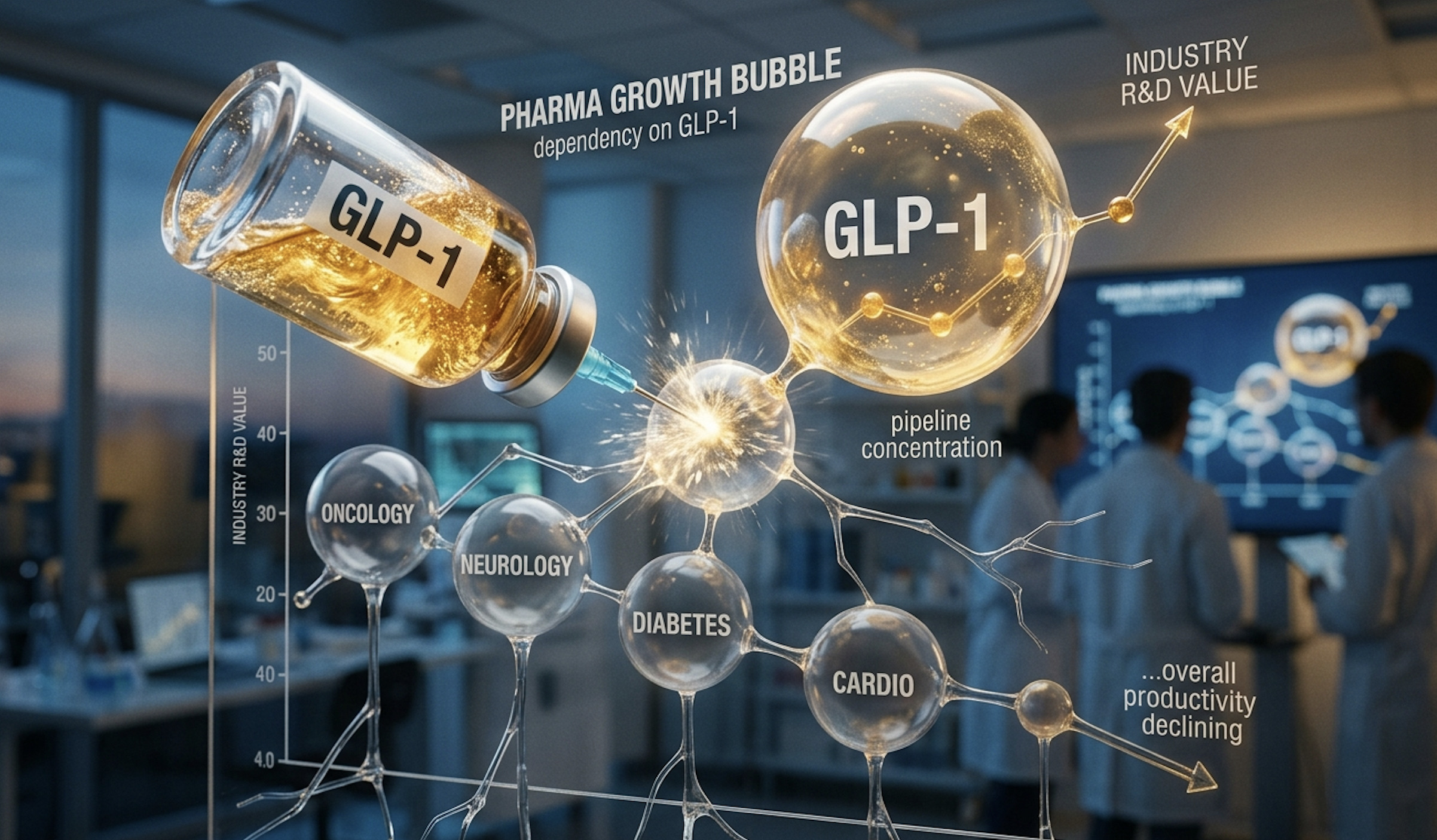
New research has warned that the pharmaceutical industry’s growing dependency on glucagon-like peptide-1 (GLP-1) weight-loss medications is creating a precarious “bubble effect,” potentially masking a broader decline in industry-wide productivity.
A report published on May 4, 2026, by Deloitte highlights that obesity treatments have overtaken oncology as the primary driver of late-stage pipeline value for the first time in 16 years. While these blockbuster drugs have lifted the average return on investment (ROI) for research and development to 7% across the top 20 global firms, the underlying reality for the rest of the sector appears much bleaker.
The Risk of Concentration
The surge in demand for drugs like Wegovy and Zepbound has fundamentally shifted the industry's focus. Obesity medications now represent approximately 25% of all projected sales in the pharmaceutical pipeline, a meteoric rise from just 1% in 2022.
However, experts caution that this success is highly concentrated. If GLP-1 and GIP assets are removed from the data, the industry's rate of return falls to a meager 2.9%. This critical dependency leaves the sector exposed to significant risk if these few mega-blockbuster drugs face launch hurdles, increased competition, or therapeutic-specific shocks.
Market Pressures and Competition
Despite the high stakes, the landscape for these drugs is rapidly maturing. In early 2026, Novo Nordisk—the manufacturer of Wegovy—issued a rare forecast of falling revenues, projecting a sales decline between 5% and 13%. The firm cited a "painful" push by the U.S. administration to lower drug prices, alongside looming patent expirations for semaglutide in several global markets.
In contrast, Eli Lilly has predicted continued sales growth, even as it prepares for the spring launch of its own GLP-1 tablet. Competition is also intensifying from cheaper compounded versions of weight-loss jabs produced by pharmacies.
The Path Forward
The findings suggest that the pharmaceutical industry must rethink its current investment strategies to build a more resilient R&D engine. Rather than settling for incremental improvements on existing drugs, analysts urge companies to adopt a bolder risk appetite for truly novel medications.
While GLP-1s continue to show promise in treating related conditions such as cardiovascular disease, sleep apnea, and even addiction, the high concentration of value in this single area remains a point of concern for long-term industry stability.