
?600-Crore Orchid Pharma Plant to Turn Kathua into India’s Antibiotic Manufacturing Hub
A new ?600-crore pharmaceutical facility in Jammu & Kashmir’s Kathua district aims to boost domestic antibiotic manufacturing and reduce India’s dependence on imported drug intermediates.
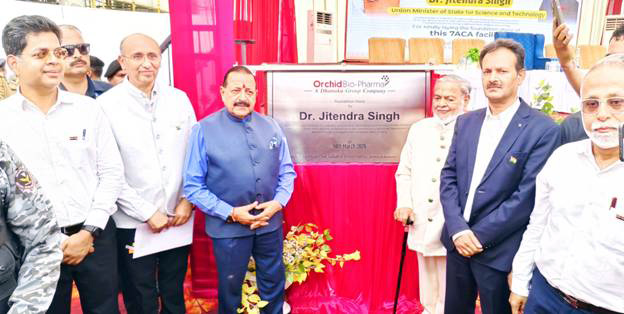
A new ₹600-crore pharmaceutical manufacturing facility being developed in Kathua district of Jammu and Kashmir is expected to significantly strengthen India’s antibiotic supply chain and reduce reliance on imported drug intermediates.
Union Minister of State for Science and Technology Dr. Jitendra Singh laid the foundation stone of the facility on March 14, 2026, marking the start of a major industrial project aimed at expanding India’s pharmaceutical manufacturing capabilities.
The plant is being set up by Orchid Pharma at Gadadhar village in Kathua with support from the Biotechnology Industry Research Assistance Council (BIRAC) under the Department of Biotechnology.
According to officials, the project forms part of the government’s broader strategy to strengthen domestic pharmaceutical manufacturing and ensure secure access to essential medicines.
Focus on critical antibiotic ingredient
The upcoming facility will manufacture Amino Cephalosporanic Acid (ACA), a critical intermediate used in the production of cephalosporin antibiotics, which are widely prescribed to treat bacterial infections.
Currently, India relies heavily on imports of this key antibiotic ingredient, largely sourced from China, which creates vulnerabilities in supply security and pricing stability.
By producing ACA domestically, the new facility aims to strengthen India’s pharmaceutical supply chain and reduce dependence on foreign sources for critical drug inputs.
Investment under the PLI scheme
The investment of about ₹600 crore is being made under the government’s Production-Linked Incentive (PLI) scheme, which encourages domestic manufacturing of essential pharmaceutical ingredients.
Speaking at the foundation ceremony, Dr. Jitendra Singh said the project reflects rising investor confidence in Jammu and Kashmir’s industrial potential.
“The investment of around ₹600 crore… reflects growing confidence in the industrial and innovation potential of Jammu and Kashmir,” the minister said.
He added that the initiative would strengthen India’s pharmaceutical manufacturing ecosystem while contributing to the region’s economic development.
Employment and regional industrial growth
The Kathua facility is expected to generate around 400 direct jobs, along with a similar number of indirect employment opportunities across logistics, supply chains, and allied services.
Officials say the project could also catalyse the development of a broader pharmaceutical ecosystem in the region.
Dr. Jitendra Singh noted that with expanding industrial infrastructure, Kathua has the potential to emerge as a major pharmaceutical manufacturing hub and contribute to India’s pharmaceutical export growth.
Strategic push for pharma self-reliance
The project aligns with India’s broader push for self-reliance in critical healthcare technologies and pharmaceutical supply chains, particularly after global supply disruptions highlighted the risks of dependence on a single source for key drug ingredients.
“This is not merely about reducing imports; it is about building strategic capability where it matters most,” the minister said while highlighting the importance of strengthening domestic manufacturing of essential medicines.
Once operational, the facility is expected to enhance India’s capacity to produce essential antibiotic ingredients domestically and support the country’s ambition to become a stronger global hub for pharmaceutical manufacturing.