
KIMS Hospitals Introduces Adaptive Deep Brain Stimulation in India for Advanced Parkinson’s Treatment
The hospital group rolls out adaptive deep brain stimulation technology, a newer neuromodulation approach designed to improve symptom control in Parkinson’s patients
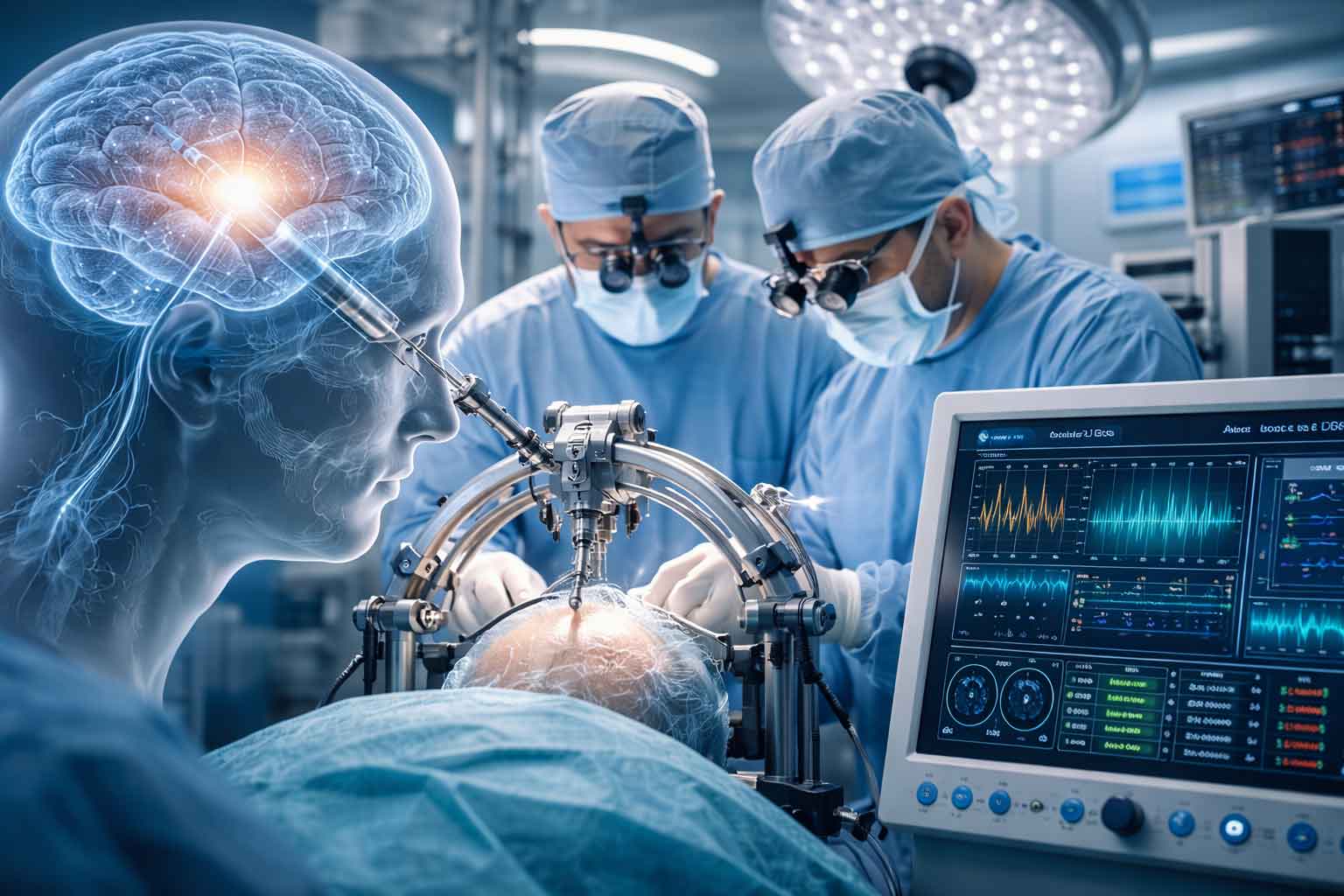
KIMS Hospitals has introduced Adaptive Deep Brain Stimulation (aDBS) in India, a neuromodulation technology designed to improve treatment precision for patients with advanced Parkinson’s disease and other movement disorders.
The technology has been deployed at KIMS Hospitals in Thane, part of the Krishna Institute of Medical Sciences network, which operates a large hospital chain across India.
Deep Brain Stimulation (DBS) is already an established surgical therapy used globally for Parkinson’s disease when medications no longer adequately control symptoms. The procedure involves implanting electrodes in specific regions of the brain to regulate abnormal neural signals that affect movement.
A shift from constant to responsive stimulation
Traditional DBS systems deliver continuous electrical stimulation to targeted brain areas. Adaptive DBS represents a more advanced approach that allows the system to adjust stimulation levels automatically based on the patient’s neural activity.
The technology monitors brain signals in real time and modifies stimulation accordingly. This “closed-loop” system aims to increase stimulation when symptoms worsen and reduce it when symptoms stabilise.
Doctors say the approach could help improve symptom control while potentially reducing side effects linked to excessive stimulation.
Addressing challenges in Parkinson’s management
Parkinson’s disease is a progressive neurological disorder that affects movement and is characterised by tremors, rigidity and slowed mobility.
Drug therapy remains the primary treatment for many patients. However, over time some patients experience motor fluctuations, medication resistance and involuntary movements, making advanced therapies such as DBS necessary.
Adaptive DBS is being explored internationally as a way to deliver more personalised neuromodulation therapy for such patients.
Growing focus on advanced neurology treatments
The introduction of adaptive DBS reflects a broader shift in neurological care toward technology-driven treatment approaches, including precision neuromodulation and brain-signal monitoring systems.
Hospitals offering DBS typically rely on multidisciplinary teams of neurologists, neurosurgeons, imaging specialists and rehabilitation experts to evaluate patients and determine suitability for the procedure.
With the adoption of adaptive DBS, KIMS Hospitals is expanding its neurology and neurosurgery capabilities as interest grows in advanced therapies for Parkinson’s disease and other movement disorders.