
India Re-opens PLI Application Window for Critical Drug Production; Meropenem, Ritonavir in Focus
Government extends deadline till March 12, 2026 to attract pharmaceutical firms to produce essential bulk drugs under the Production Linked Incentive programme
- By PharmaNews Live Desk
- New Delhi
- Mar 02, 2026
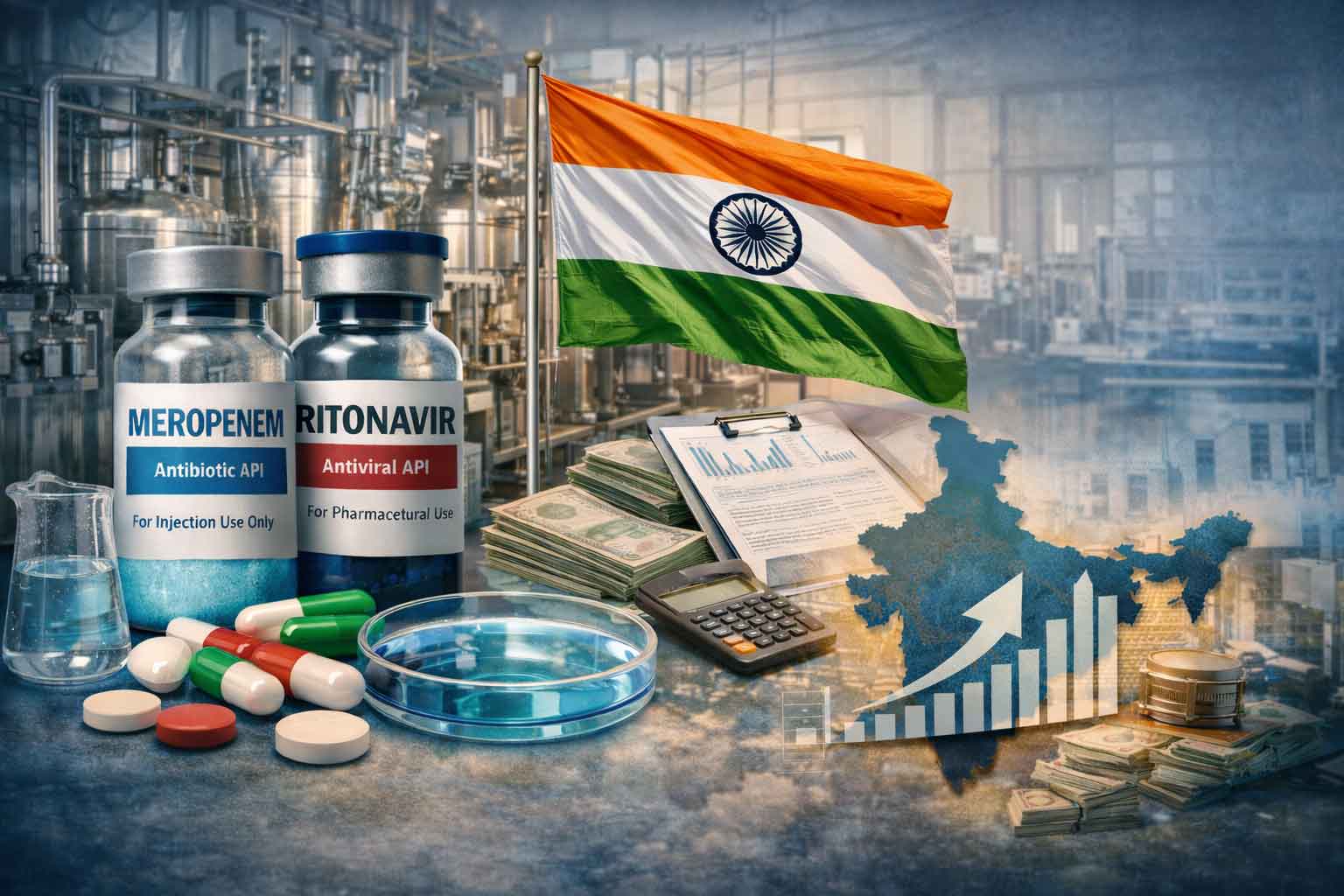
India’s Department of Pharmaceuticals (DoP) has officially reopened the application window under the Production Linked Incentive (PLI) Scheme for Bulk Drugs to boost domestic manufacturing of select Active Pharmaceutical Ingredients (APIs), including the broad-spectrum antibiotic Meropenem and antiviral Ritonavir. The fresh window will remain open until March 12, 2026, according to DoP’s public notification.
The DoP move follows industry demand from pharmaceutical companies that were unable to submit applications before the earlier deadline of January 16, 2026. “Subsequent to representations received from industry stakeholders expressing intent to participate under the Scheme, and with the approval of the Competent Authority, it has been decided to re-open the application window for the aforesaid eligible products,” the department said in its statement.
PLI Scheme Context and Objectives
The PLI scheme for bulk drugs was launched in March 2020 with a total budgetary outlay of ₹6,940 crore to strengthen India’s capacity to manufacture 41 essential bulk drugs and reduce over-dependence on imports — particularly from China — for key pharmaceutical inputs.
Meropenem and Ritonavir are two of the 41 APIs eligible under the scheme, all of which are listed in the official PLI guidelines.
Under the framework, financial incentives are linked to domestic sales and incremental production by eligible manufacturers. The scheme is scheduled to run through FY 2029-30 for its full duration, but specific incentives and performance periods vary by product type.
Eligibility Requirements and Selection Criteria
For Meropenem, applicants must demonstrate a minimum annual capacity of 4 metric tonnes (MT), and the scheme has a total capacity allocation of 16 MT, allowing up to four selected applicants. For Ritonavir, the minimum annual capacity required is 5 MT, with a total cap of 20 MT and similar selection limits.
Applicants seeking incentives under this re-opened window must submit their entries online via the official PLI Bulk Drugs portal by March 12. Those whose earlier approvals were cancelled or withdrawn for non-performance are not permitted to reapply for the same products.
Strategic Significance for India’s Pharma Sector
India has long relied on imports — especially from China — for APIs that are critical to the production of antibiotics, antivirals, cardiovascular drugs, and more. The PLI scheme was inaugurated to hasten import substitution and build a more resilient supply chain for life-saving medicines, with incentives provided for both fermentation-based and chemical synthesis products.
Since its inception, the PLI programme has led to domestic investments, commissioning of production facilities, and steps toward self-reliance in several key drug ingredients, reducing vulnerabilities exposed during global disruptions such as the COVID-19 pandemic.
Industry and Policy Implications
The extension of the PLI application deadline for bulk drugs underscores ongoing policy support to strengthen India’s pharmaceutical manufacturing base. In recent years, the broader PLI programme across sectors like electronics, medical devices, specialty steel and textiles has also seen significant disbursement and industry participation, reflecting the government’s manufacturing-led growth strategy.
For the pharma sector, building capacity for complex APIs like Meropenem and Ritonavir — both vital in treating bacterial infections and certain viral illnesses — could enhance India’s ability not only to meet domestic demand but also to serve global markets.