
India’s Pharma Sector Rises as Global Players Look Beyond China
As geopolitical tensions deepen and the global life sciences industry seeks to reduce dependency on China, India’s pharmaceutical sector is rapidly emerging as a formidable global player. In a notable shift, Indian Contract Development and Manufacturing Organizations (CDMOs) are not only scaling operations abroad but are also investing heavily in advanced drug research and development—moving from low-cost production hubs to innovation-focused partners.
- By Newsdesk
- New Delhi
- May 26, 2025
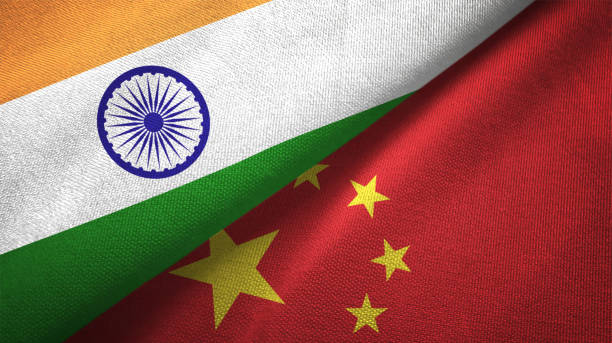
As geopolitical tensions deepen and the global life sciences industry seeks to reduce dependency on China, India’s pharmaceutical sector is rapidly emerging as a formidable global player. In a notable shift, Indian Contract Development and Manufacturing Organizations (CDMOs) are not only scaling operations abroad but are also investing heavily in advanced drug research and development—moving from low-cost production hubs to innovation-focused partners.
From Manufacturing Workhorses to Innovation Engines
The past year has marked a decisive transformation for Indian pharma firms. Companies like Suven Pharmaceuticals, Syngene International, and Aurigene Pharmaceutical Services are spearheading an international expansion drive that reflects both strategic intent and scientific ambition.
Suven’s $65 million acquisition of NJ Bio Inc. in the United States exemplifies this shift. Known for its work in antibody-drug conjugates, NJ Bio brings advanced capabilities in next-gen cancer therapies. “We’re focused on acquiring technologies that push our scientific edge,” said Vivek Sharma, Suven’s Executive Chairman.
Similarly, Syngene—a Biocon subsidiary—secured a biologics manufacturing site in Baltimore from Emergent BioSolutions for $36.5 million. “This acquisition strengthens our US footprint and brings us closer to our customer base,” noted CEO Peter Bains.
China+1 Strategy Drives Growth
The momentum behind India’s rise is partially fueled by the global pharma industry's China+1 strategy. Mounting concerns over supply chain vulnerability, trade frictions, and evolving regulatory risks have prompted Western pharmaceutical companies to diversify their manufacturing base.
Sai Life Sciences, one of the early movers, had already established R&D centres in the US and UK, positioning itself well for this shift. “Customer appetite for nearshoring is clearly growing,” confirmed CFO Siva Chittor.
The US BioSecure Act, which seeks to limit American dependence on Chinese drugmakers, could further accelerate the trend—should it move forward after its current stall in Congress.
India's Edge: Talent, Infrastructure, and Strategic Intent
India’s competitive advantage lies in its robust scientific workforce, regulatory adaptability, and cost-effective manufacturing capabilities. Aurigene CEO Akhil Ravi highlighted the company’s latest biologics facility in Hyderabad as part of an ongoing investment in both infrastructure and expertise.
At Jubilant Ingrevia, CEO Deepak Jain anticipates a six to sevenfold increase in pharma-related contracts in the coming years. “This is a defining moment for India,” he remarked. “If not us, then who?”
Echoing this sentiment, Nandini Piramal, Chairperson of Piramal Pharma, cited the company’s $90 million expansion of its US facilities as a marker of readiness. “We’re well-positioned to support the onshoring needs of US pharma companies,” she stated.
Challenges on the Road Ahead
Despite the optimism, industry leaders caution against complacency. Operational challenges—including regulatory delays and slower project execution—still hinder India’s potential to fully capitalize on this global pivot.
“Speed and agility are now non-negotiable for global innovators,” said Annaswamy Vaidheesh, former Managing Director of GSK Pharma India. “Indian CDMOs must close the gap in efficiency and execution, especially as Chinese competitors continue to set global benchmarks.”
While India’s CDMO sector is growing rapidly, Chinese firms continue to dominate with over 80% of the global market share, thanks to their scale, speed, and streamlined processes.
Capital Confidence and the Road to Reinvention
Investor confidence in Indian CDMOs is on the rise. In just 15 months, the sector has attracted over $900 million in private equity investments and $750 million through IPOs, according to Grant Thornton.
“This influx of capital reflects the industry’s growing strategic significance,” said Bhanu Prakash Kalmath SJ, Partner and Healthcare Leader at Grant Thornton.
Syngene CEO Peter Bains captured the moment in a recent post, writing, “India’s CDMO industry is entering a pivotal growth phase.” Between 2019 and 2024, the sector clocked a compound annual growth rate of 15%—twice the global average.
India Steps into a Leadership Role
With shifting global dynamics, India is no longer a peripheral player in the pharmaceutical supply chain. Its CDMOs are becoming essential partners in the drug development lifecycle—from early-stage research to commercial manufacturing.
As one recent industry analysis aptly noted, India is no longer just responding to changes in global pharma—it is actively driving them.
In this reimagined future, the country’s pharma sector isn’t just a backup—it’s becoming the backbone of global drug innovation.
(With inputs from The Economic Times)