
Private Healthcare Dominates India’s Eye-Care Landscape as Public Services Lag Behind
According to the report, over 70% of eye-care facilities are privately owned, while government and NGO-run centres together account for less than 30%. Experts warn that this skew has made quality eye-care largely dependent on income, putting equitable access out of reach for many.
- By Newsdesk
- New Delhi
- Nov 11, 2025
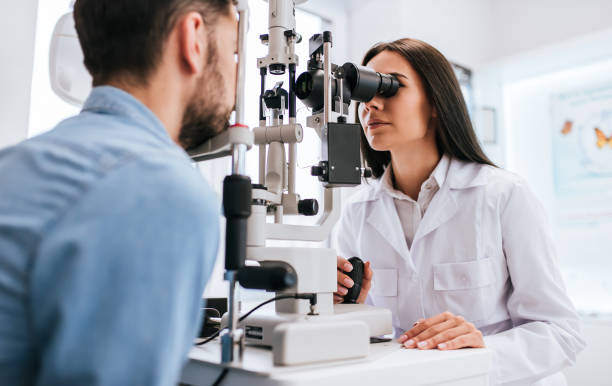
A nationwide survey led by the All India Institute of Medical Sciences (AIIMS) has revealed that India’s eye-care ecosystem is heavily dominated by private players, exposing deep gaps in public-sector capacity and accessibility.
The survey, Human Resources and Infrastructure for Ophthalmic Services in India, conducted in 2020–21 in collaboration with the All India Ophthalmological Society and Vision 2020: The Right to Sight – India, is the largest mapping of its kind. It assessed nearly 8,000 eye-care institutions across the country, highlighting a troubling imbalance in service delivery.
According to the report, over 70% of eye-care facilities are privately owned, while government and NGO-run centres together account for less than 30%. Experts warn that this skew has made quality eye-care largely dependent on income, putting equitable access out of reach for many.
The data further shows that only 40% of surveyed institutions provide round-the-clock emergency eye-care services. Fewer than 6% have eye banks, and under one-third offer rehabilitation for patients with low vision.
Dr. Praveen Vashist, Professor and Head of Community Ophthalmology at AIIMS, noted that private centres perform nearly 60% of all cataract surgeries and 90% of refractive-error corrections in India. In comparison, government hospitals handle only around 40% of cataract surgeries and a mere 10% of refractive-error procedures. “This skew impacts equitable access, especially in rural or low-income regions,” he said.
India currently has about 20,944 ophthalmologists — roughly one for every 65,000 people — and 17,856 optometrists or ophthalmic technicians. These figures fall short of Vision 2020’s goals. On average, the country offers around 15 ophthalmologists and 74 eye-care beds per million people.
Regional disparities are equally stark. States such as Delhi, Maharashtra, Goa, and Tamil Nadu meet or exceed recommended specialist densities, while others like Uttar Pradesh, Bihar, Madhya Pradesh, Assam, and West Bengal face acute shortages. Uttar Pradesh alone requires over 2,400 additional ophthalmologists to bridge the gap. “The problem is not only in numbers but also in how unevenly they’re distributed,” Dr. Vashist observed.
Even in Delhi, where eye-care infrastructure is comparatively better, the shortage of ophthalmic technicians at primary health centres remains a concern. “Every dispensary should ideally have one,” said Dr. Vashist. The AIIMS RP Centre currently operates 27 primary vision centres, 25 of which are in Delhi, with plans to expand the network to 250. Meetings with state and district programme officials have been initiated to speed up this expansion.
While cataract and glaucoma services are widely available — offered by 91.5% and 71.5% of institutions respectively — advanced subspecialty care like vitreoretinal surgery, keratoplasty, and neuro-ophthalmology remains concentrated in tertiary hospitals.
The survey has also led to the development of a new page on the India Vision Atlas, a digital platform mapping the nation’s eye-care resources. The portal enables policymakers and the public to access data on infrastructure and workforce distribution across states and districts.
Summarising the findings, Dr. Vashist noted, “India has made significant progress in cataract surgery, but achieving universal eye-care requires a stronger public system and well-equipped primary vision centres to ensure quality care is accessible to everyone — not just those who can afford it.”