
UAE Conference Calls for Greater Adoption of Advanced Nuclear Medicine to Transform Cancer Care
The two-day event concluded with strong recommendations to boost specialised training and qualification programmes for healthcare professionals, alongside integrating state-of-the-art nuclear imaging and therapeutic techniques into mainstream medical practice. Experts highlighted the growing role of molecular imaging and targeted radioisotope therapy in delivering personalised, highly precise treatments that minimise damage to healthy tissues and significantly improve recovery outcomes.
- By Newsdesk
- Dubai
- Apr 21, 2025
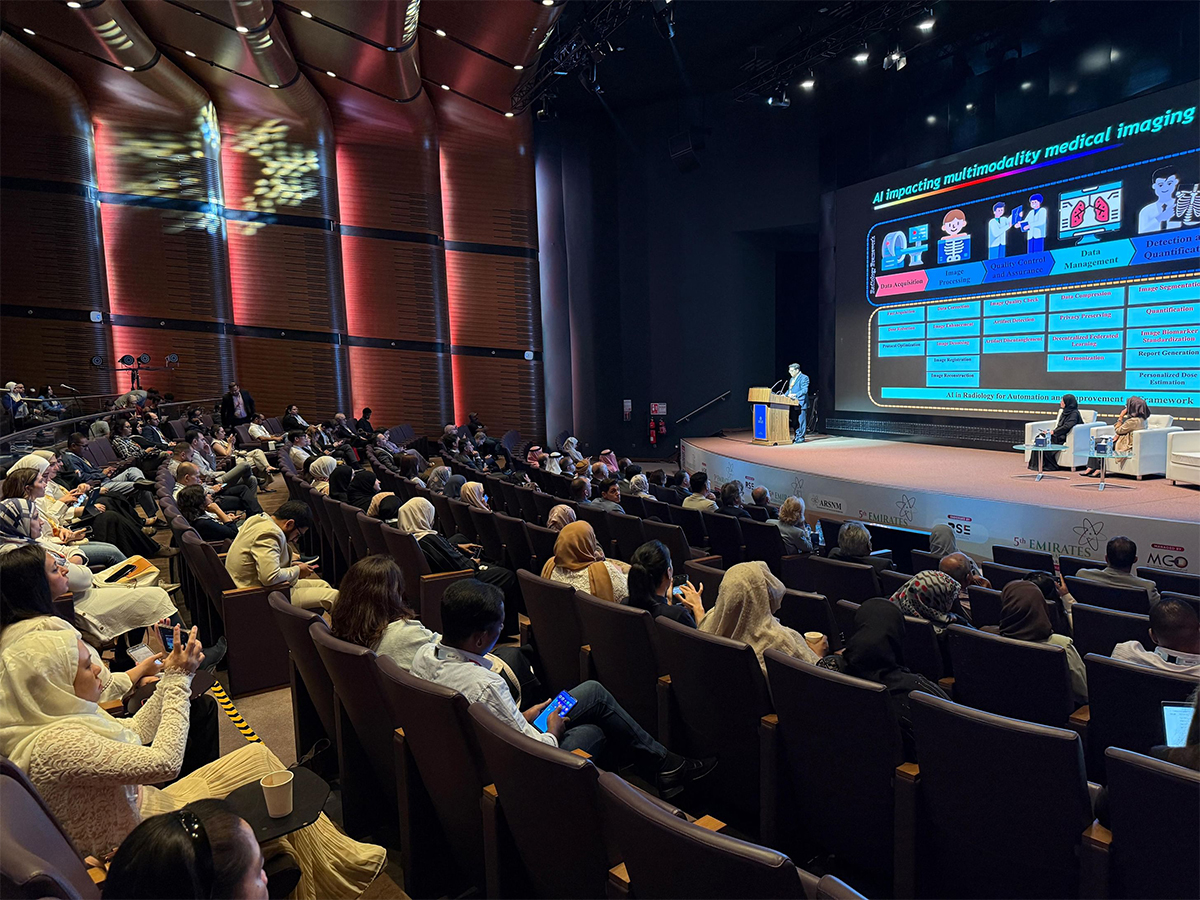
Medical experts and specialists attending the 5th UAE International Nuclear Medicine Conference, held in collaboration with the Arab Society for Nuclear Medicine at the Mohammed Bin Rashid University of Medicine and Health Sciences, have urged the expansion of advanced nuclear medicine technologies to enhance cancer care and chronic disease management across the region.
The two-day event concluded with strong recommendations to boost specialised training and qualification programmes for healthcare professionals, alongside integrating state-of-the-art nuclear imaging and therapeutic techniques into mainstream medical practice. Experts highlighted the growing role of molecular imaging and targeted radioisotope therapy in delivering personalised, highly precise treatments that minimise damage to healthy tissues and significantly improve recovery outcomes.
Dr. Batoul Al Balooshi, President of the Arab Society for Nuclear Medicine and Head of the Department of Nuclear Medicine at the Dubai Health Authority, underlined the transformational potential of nuclear medicine in tackling difficult-to-treat cancers. “We are witnessing a paradigm shift in treating cancers that traditionally showed resistance to chemotherapy or radiation,” she said. “With advanced nuclear medicine techniques, we’ve successfully treated 15 patients with prostate and endocrine tumours—achieving full tumour control in every case.”
Dr. Al Balooshi added that the UAE’s infrastructure in nuclear medicine is among the most advanced in the region, with 14 specialised centres equipped with the latest diagnostic and therapeutic technologies spread across the Emirates. This robust medical framework, she noted, positions the UAE as a regional hub for cutting-edge nuclear medicine.
The final day of the conference featured a series of in-depth scientific sessions that explored innovations in nuclear therapy, particularly in the treatment of thyroid and prostate cancers. One key topic was “Thyranostics”—a combined approach that uses radioactive tracers both for diagnosis and treatment of thyroid conditions. Discussions also examined how best to manage thyroid cancer after radioactive iodine therapy, as well as managing complications.
Advancements in targeted radiotherapy for prostate cancer also took centre stage, with researchers exploring future applications of the treatment over the next decade. Presentations introduced novel imaging techniques for PSMA receptors, reviewed the clinical use of Lu-PSMA 617 in late-stage cases, and compared emerging therapies such as Lu-177 and TB-161 for their potential in improving patient outcomes.
As the conference drew to a close, delegates emphasised the importance of collaborative scientific research, regional knowledge-sharing, and stronger international partnerships to drive innovation. They also advocated for increased public awareness campaigns to highlight nuclear medicine’s role in early detection and personalised treatment of serious health conditions.
(With inputs from ANI)