
Latest News
- Min. Nadda Unveils ?13,000-Crore Bio-Pharma SHAKTI and Chemical Parks Push to Expand India’s Global Chemicals and Biologics Footprint
- Aurobindo Pharma Subsidiary Launches Generic Cancer Drug in US, Expands Oncology Portfolio in Global Generics Market
- KIMS Hospitals Introduces Adaptive Deep Brain Stimulation in India for Advanced Parkinson’s Treatment
Min. Nadda Unveils ?13,000-Crore Bio-Pharma SHAKTI and Chemical Parks Push to Expand India’s Global Chemicals and Biologics Footprint
India outlines a major strategy to strengthen its chemical and biopharmaceutical sectors through infrastructure investment, research expansion and regulatory reforms
- By PharmaNews Live Desk
- New Delhi
- Mar 05, 2026
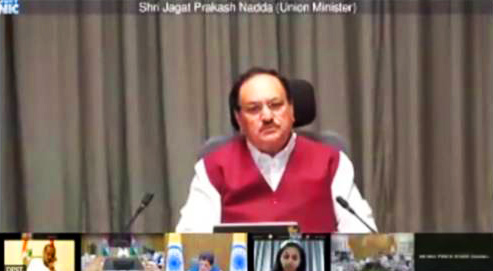
India is stepping up efforts to strengthen its global standing in the chemical and biopharmaceutical industries, with the government announcing a series of policy initiatives and investments aimed at expanding manufacturing capacity, accelerating innovation and improving sector infrastructure.
Speaking at a post-Budget webinar on March 3, 2026, Union Minister for Chemicals and Fertilisers J.P. Nadda said the government is investing ₹13,000 crore in the Bio-Pharma SHAKTI programme and the development of dedicated chemical parks, describing the move as a strategic step to position India for the next phase of growth in the global chemicals and biologics markets.
Expanding India’s role in the global chemical industry
India’s chemical sector currently generates an output of around ₹19.4 lakh crore, accounting for roughly 3 per cent of the global chemical industry. According to the government, the sector is expected to expand significantly in the coming years.
Nadda said India aims to increase its share in the global chemical sector to 5–6 per cent by 2030, with the long-term ambition of building a $1 trillion chemical industry by 2040.
“India has emerged as a reliable and competitive manufacturing base, and the chemical sector will play a key role in supporting the country’s economic growth and industrial development,” he said.
₹13,000-crore push for Bio-Pharma SHAKTI and chemical parks
As part of the strategy, the government plans to develop three large chemical parks with plug-and-play infrastructure, integrated utilities and modern logistics systems to support industry growth.
The parks will include centralised effluent treatment facilities, shared utilities and industrial symbiosis systems, which the government says could reduce production costs by 20–40 per cent while improving environmental sustainability.
Nadda said the initiative is designed to strengthen India’s competitiveness by creating integrated industrial ecosystems that support chemical manufacturing at scale.
Biologics and biosimilars seen as the next growth frontier
A key component of the government’s strategy is the Bio-Pharma SHAKTI Mission, which seeks to expand India’s capabilities in biologics, biosimilars and advanced biomanufacturing.
Nadda noted that the global pharmaceutical landscape is undergoing a major shift toward biologic medicines.
“By 2035, nearly 40 per cent of medicines worldwide are expected to be biologics, which presents a significant opportunity for India,” he said.
The minister added that patents worth approximately $300 billion are expected to expire by 2030, creating a large market for biosimilars.
He said that even a one-per-cent share of the global biosimilars market could translate into an opportunity of nearly ₹2 lakh crore annually for India.
Strengthening research, clinical trials and regulatory systems
To support innovation and drug development, the government is also working to expand India’s research infrastructure and clinical trial capacity.
Nadda said India plans to develop around 1,000 clinical trial sites across the country, aimed at strengthening research capabilities and enabling faster development of biologics and advanced therapies.
The minister also highlighted the role of the National Institute of Pharmaceutical Education and Research (NIPER) network in strengthening talent development and industry-academia collaboration.
In addition, the government is focusing on strengthening the Central Drugs Standard Control Organisation (CDSCO) to enable faster regulatory approvals for biosimilars, fermentation-based drugs and other advanced therapies.
Policy support and global trade opportunities
The minister also underlined the importance of trade policy and international partnerships in strengthening the sector’s global reach.
He said India’s expanding network of free trade agreements and global economic partnerships could help domestic companies access new markets and integrate more deeply into global supply chains.
Industry stakeholders were encouraged to take advantage of policy initiatives aimed at boosting research, innovation and manufacturing competitiveness.
As India seeks to move beyond its established strength in generic medicines, policymakers are positioning the country to play a larger role in biologics, specialty chemicals and advanced pharmaceutical manufacturing, sectors expected to drive the next phase of growth in the global healthcare and chemicals industries.